Skip Navigation
Volunteer Bucks Home
  • Organisations
Create accountLog in

Contact

  • New Rd, Weston Turville, Aylesbury HP22 5XQ, UK
  • [email protected]
  • 01296 846678
Volunteer Bucks

Volunteer Bucks

  • For volunteers
  • For organisations
  • Contact
  • About us

Join

  • Opportunities
  • Discover Organisations
  • Create organisation
  • Create account
  • Login
  • Help
  • Policies
  • Privacy Policy
  • Terms

Powered by Deedmob tools

Post | July 2024 | Volunteer stories | 2 min read

Sam - family mentor for Connection Support

Written by

Rachel Fisher
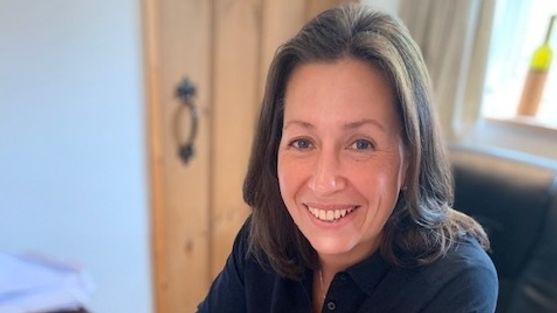
Woman with brown hair who is smiling and wearing a blue shirt.

Sam says her whole experience has been positive and she’s delighted to be supporting a family to get to a much happier position.


What led you to volunteer?

I signed up with the Volunteer Matching Service in the Christmas holidays; our family had gone through a difficult time over the past year, what with COVID and everything, but I realised we’d been lucky compared with some families who did not have the advantages and support that we did. I have two very young children and thought I would like to volunteer to help others with young families, to ‘pay it forward’. When I got the call from the Volunteer Matching Service about the Boost Family Support role it was exactly what I wanted.


What is your role?  

I am paired up with a family as a mentor to support them and provide encouragement and advice to help them move to a stable and positive environment for both the parents and the children.


What difference do you think your mentoring has made? 

I think the family always had the ability to sort things out for themselves but needed someone to listen to them, help them find a way forward and reassure them that they could succeed. It was important to them that I was there for the whole family and didn’t just have a narrow focus on the children. It has been brilliant seeing the whole family progress to a much happier place. Watching them change and grow in confidence has been fascinating.


What do you gain personally from volunteering?

I think it has opened up my thinking and my attitude to dealing with issues in my own life. Also seeing how the family has progressed has really given me joy.


Did anything surprise you about the role?

Not exactly, but I did wonder how good a fit I would be as I work in a very corporate environment and lots of the other volunteers at Connection Support work with children or are in much more person-focussed jobs. In fact, I took to it like a duck to water.


Would you recommend volunteering? 

I would absolutely recommend it. You get so much out of it for yourself as well as helping others. There are big benefits on both sides.


Additional information:

The Boost Family Mentoring service is no longer available but to find out more about Connection Support and other volunteering opportunities they have to offer, visit the Connection Support website.

Share Post
Related Posts
Two pairs of hands holding piping bags, decorating various shaped biscuits with white icing

Madeleine - kitchen volunteer for Oasis Partnership

| Volunteer stories

Madeleine runs baking sessions in the training kitchen at the Bagnall Project in Chesham, run by the Oasis Partnership. What is your role? I run baking sessions for young people in the training kitchen at the Bagnall Project. It is all very hands-on and inclusive. Each week I decide what we are going to bake and let the young people know in advance. If they don’t like an ingredient then we can plan to make an alternative version as well so we have some making cinnamon buns and others making fruit buns. Each session lasts about 2-2½ hours and although everyone is focused on the baking it is a social experience too. What led you to volunteer? I had been working for many years in the charity sector on the fundraising side and, after being made redundant, I had time on my hands that I could do some good with. I initially thought I would volunteer driving people around. Baking with young people just wasn’t something I’d thought about but when the Volunteer Matching Service rang and mentioned the kitchen role to me, it just ticked all my boxes. Being matched to the right role makes all the difference both to the volunteer and the charity. What difference do you think your role makes? I see the young people developing and growing in confidence in addition to learning new recipes and baking skills. Some of them are really creative and this is a chance for them to demonstrate that. I’m sure the practical and social benefits to them will continue well after they have moved on. What do you gain personally from volunteering? I really enjoy it. Sometimes I go into a session feeling tired but always come out feeling invigorated. I see the young people starting to make friends and develop confidence as well as learning to bake. At the end of the session, as they leave with their freshly baked food and having clearly had a good time, I think to myself “I helped make that happen”. Do you feel valued as a volunteer? The Oasis Partnership is very good at making us feel appreciated. Volunteers get regular newsletters to keep us involved and informed and I get regular positive feedback from the Volunteer Co-ordinator. I know I am appreciated. Would you recommend volunteering? Yes; I would definitely recommend finding the right role though and the Volunteer Matching Service can help with that. If the role is right for you, you’ll find it really rewarding. Additional information: You can find out more about The Oasis Partnership on its website .
See more
Woman in blue patterned top and white trousers sitting on a mobility scooter

Katy - volunteer with High Wycombe Shopmobility

| Volunteer stories

Katy takies bookings for scooters or wheelchairs and hands them over to clients at the Eden Centre in High Wycombe. What led you to volunteer? During the pandemic I saw lots of stories about people volunteering and I just wanted to help, to ‘give something back’, so I registered with the Volunteer Matching Service. When one of the team spoke to me about the Shopmobility role, I knew nothing about the charity or what it does, but I thought I’d give it a go, I find I am really enjoying it. What is your role? I am one of the volunteers who man the Shopmobility office in the Eden Centre in High Wycombe. On a typical afternoon I’ll spend my time answering the phone, taking bookings for scooters or wheelchairs and handing them over to clients for their use. If a client hasn’t used the service before I’ll sort out their membership and take them through a mini-driving test to make sure they know how to use the equipment safely. When the scooter or wheelchair is returned then I’d clean it to minimise COVID infection risk. Was there anything surprising about the role? I had to do a little driving test in a mobility scooter myself to make sure I could operate it safely as well as showing clients how to use them. One of the services the charity offers is that we can meet clients at the bus station with a pre-booked scooter or wheelchair so its important that all the team can ride them safely. We also have to be able to manoeuvre them around the premises for cleaning and storage. What do you gain personally from volunteering? I enjoy interacting with people who I wouldn’t have met in my everyday life. Many of them are eager to chat and, for some, a trip to the Eden Centre with the help of a Shopmobility scooter is the only outlet they have. It is wonderful to be able to make a difference to people. Many of them are just so grateful, and often pleasantly surprised that the service is free. I am part of a great bunch of people at Shopmobility, it is a really friendly team. They are very flexible and understanding if I can’t volunteer on my usual afternoon and have to swap to a different day. Would you recommend volunteering? I would absolutely recommend volunteering – whether at Shopmobility or elsewhere. If you have the time, it can be so fulfilling. Additional information: You can find out more about High Wycombe Shopmobility on its website .
See more
Woman with blond hair wearing blue jumper with stripes. She is smiling and kneeling down while holding a small dog

Caroline - volunteer mentor for a young person

| Volunteer stories

Caroline was a volunteer mentor with Transitions UK on its Attain project which supports vulnerable young people aged 17-22 who are leaving care and need help into work, education and accommodation. What led you to volunteer? Like lots of people, I signed up as a volunteer at the start of the pandemic and have had several roles. When the Volunteer Matching Service approached me about the mentoring role with Transitions UK, I was immediately interested as I am a relationship counsellor with a particular interest in young people. I was matched to the charity in December 2020 and, after an initial interview and training over Zoom, I was matched with a young person at the end of January. The team at Transitions UK were hugely supportive. They facilitated my introductory Zoom meeting with my beneficiary which was all about starting to get to know each other as well as identifying goals which I would help my beneficiary work towards. After that first virtual meeting, I met with my beneficiary regularly for outdoor walks, usually with my puppy which really helped us to connect – thankfully, something we could do even during lockdown. Later on we met for coffee or lunch, and we also touch base a lot via WhatsApp and Instagram. How did the role progress? It is fair to say that although all cases are different, this one was quite unique. It quickly became obvious that the goals identified at our first Zoom meeting could not be addressed without other issues faced by my beneficiary being sorted out first. My beneficiary – let’s call her M – was at that point in her life where she needed to decide whether to continue with her education, start an apprenticeship or find other paid work. Making a decision about what to do next and taking that decision forward were the goals that we originally identified. M firstly decided she’d like to continue her education in conjunction with working and so I helped her identify apprenticeship opportunities, spoke to colleges on her behalf and helped her put together a CV. However, M’s home life was far from settled and she moved from one part of Bucks to another several times in a few short months. She lived with different members of her extended family and was registered with Social Services for other potential care options, including semi-independent living and foster care. This meant it was hard for her to put down roots and make plans. She was also becoming increasingly anxious and her behaviour was erratic. So how did you move things forward? From her perspective, M had had many negative experiences with adults and authority figures which meant she had developed a level of resistance to anyone telling her what to do. I took a different approach. Instead of telling M what to do and how to behave, I worked with M, with social services and her wider family, to help find a permanent solution to her underlying problem: lack of a safe and settled home life. I was her only constant, and by developing a bond of trust with her, it meant that I could be quite effective in helping her. M now has concrete plans for a better future. She will be moving away from the area, and although we’ll no longer be able to meet face to face, and I’ll miss our walks with my puppy, we are both determined to stay in touch. What surprised you about mentoring? I did not expect to be so directly involved with Social Services or M’s wider family. I had no experience in that field and I had to learn as I went along. It was important that I set and maintained boundaries. While I would always keep to commitments I made to M, it was important to remember I’m not her Mum or her social worker. I’m something different, her mentor – helping her find her own way forward and listening and supporting her along the way. What do you gain personally from volunteering? Although I have three teenage children of my own, mentoring M really opened my eyes as to how tough life can be for some young people, through no fault of their own. Getting to know M has taught me that not everyone in the same situation conforms to the same pattern. I feel I made a real difference to M. She knew I was there for her and now she messages me regularly, asks for my opinion and shares news unprompted, which is a real success! What would you say to anyone thinking of volunteering as a mentor? All cases are different – beneficiaries all have different issues and that means different types of mentor(s) are needed. You don’t need any special knowledge or experience, but you do need patience, persistence and understanding. It is important to be open-minded and accepting of the beneficiary. It takes time and commitment but can be so much more rewarding than other types of volunteering.
See more